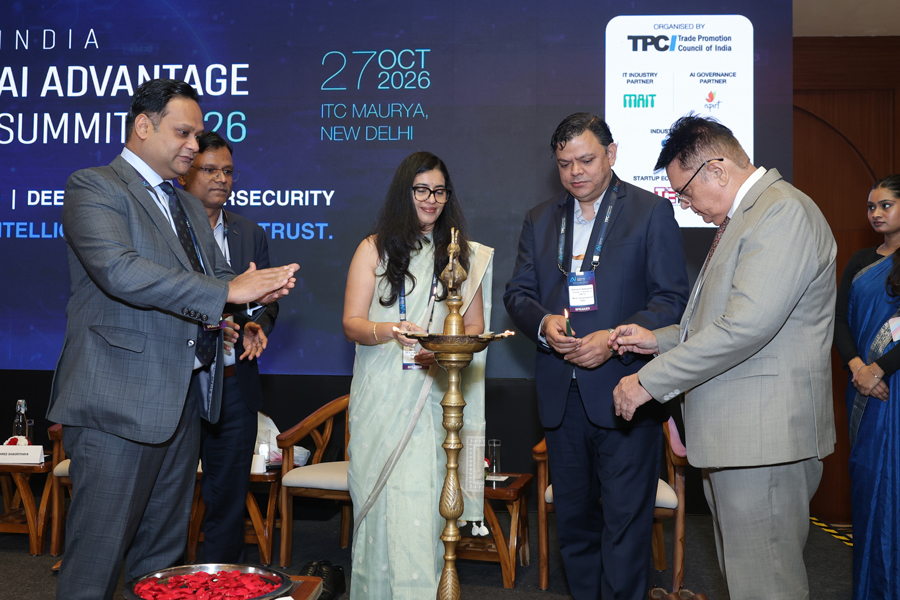
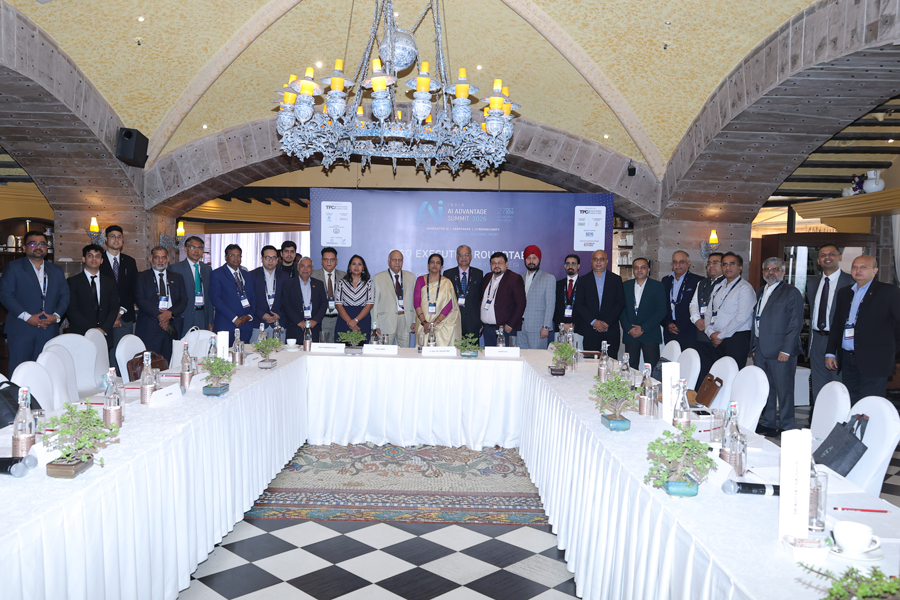
The Trade Promotion Council of India (TPCI) organised the India AI Advantage Summit 2026 on 27 October at ITC Maurya, New Delhi, convening government, industry and experts on secure, trusted AI adoption.
TPCI organised the India AI Advantage Summit 2026 on 27 October at ITC Maurya, New Delhi. More than 250 CXOs, CISOs, CTOs and policymakers attended to build a secure, resilient framework for India’s expanding AI infrastructure.
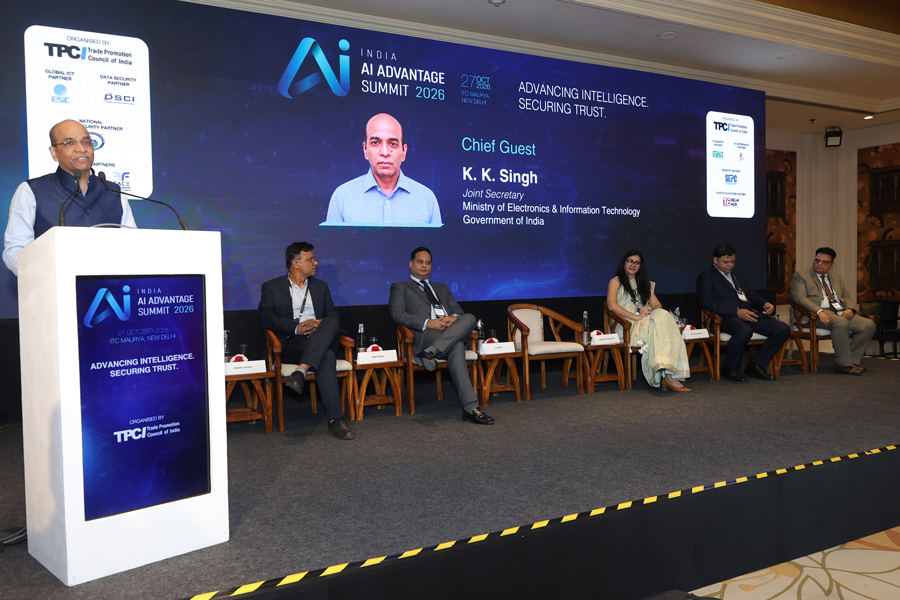
Shri K K Singh, Joint Secretary, MeitY, was the Chief Guest. The opening plenary also featured senior voices from CERT-In, STPI, Capgemini, Tech Mahindra, Oracle India and PwC. Six sessions covered generative AI, deepfakes, agentic AI, data privacy and governance, AI in cyber defence, and trust in digital transactions.
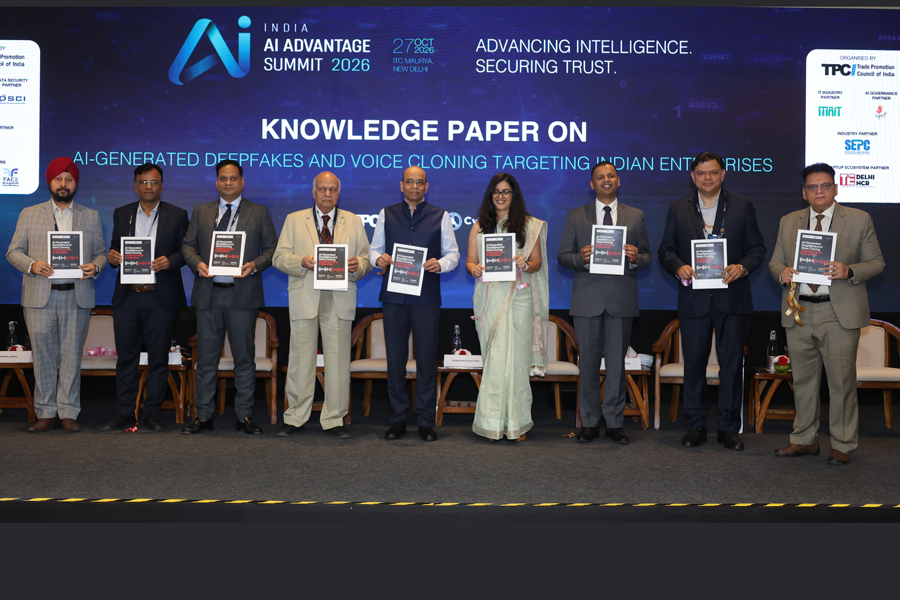
TPCI and CyberPeace unveiled a report, AI-Generated Deepfakes and Voice Cloning Targeting Indian Enterprises. It shows that India’s cyber fraud losses rose about 206%, from ₹7,465.1 crore in 2023 to ₹22,845.7 crore in 2024. A live deepfake attack simulation showed delegates how convincing these threats have become.
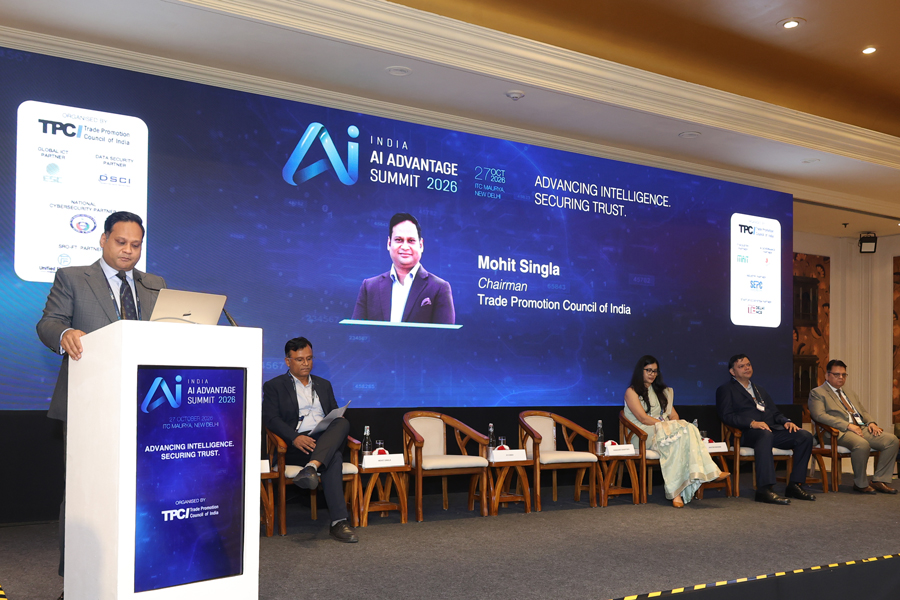
Shri Mohit Singla, Chairman, TPCI, described AI as a double-edged sword. He noted that trade runs on trust, and urged industry to prepare for both the promise and the risks of the technology now.
Shri Singh said the DPDP Act is expected to become operational by mid-2027. He noted that India has 5 lakh cybersecurity professionals against a need for 13 lakh. He added that existing IT rules are sufficient for now, with separate regulation possible if required.

The study and industry inputs produced three recommendations:
- Approve no payment, credential change or data release on voice or video alone, starting with the CEO and the board.
- Build a consolidated reporting playbook covering the bank, the 1930 helpline, CERT-In, the sector regulator, the Data Protection Board and the police.
- Test the arrangement within 90 days through a deepfake tabletop exercise that escalates to the board.
